Sustainability
is Key
The music industry pulsates with energy and creativity, shaping our lives through rhythm and rhyme and for many of us feels essential. Like all sectors however it leaves an imprint on the world around us, an impact that we should consider and seek to keep to a minimum.
Recorded Music Industry Data
A favourite album will be maintained and kept, enjoyed again and again and remain treasured long after many other plastic products have been abandoned and discarded. Physical music formats are far from being single use plastics, they are made to last and particularly in the case of vinyl, are often passed on from generation to generation. The economic significance of physical music products also cannot be understated. Many artists rely on the income generated from sales of physical product to sustain their careers. As streaming services reshape the music landscape, the financial support derived from physical products is increasingly a lifeline for artists striving to continue to create, tour, and produce, and subsequently forms a crucial element in preserving the future of the music industry.
There are a number of inroads being made across the entire supply chain towards a more sustainable future for physical products, through innovation in pressing techniques and circularity as well as removal of fossil fuels from the creation of new record pressing compounds. Sustainability has become a real focus at all stages of manufacturing and significant efforts are being made to reduce emissions and lessen the environmental impact of our activities as an industry.
Plastic usage for physical music formats peaked around the year 2000 at the height of CD manufacture and has since declined considerably. While manufacturing physical items has obvious related emissions, online music consumption is also energy intensive. Storing files on servers requires significant upkeep, and the overall greenhouse gas emissions from music consumption have increased in the digital age, largely due to streaming.
Emissions from downloads and streaming in 2016 were actually greater than emissions from all physical manufacture in 1977!
The results of a survey we ran in 2024 revealed that many people perceive digital formats as more sustainable than physical ones, despite streaming's substantial carbon footprint. Zooming out to the broader context of cloud computing, a recent study from MIT’s Stephen A. Schwarzman College of Computing found that the cloud's carbon footprint now surpasses that of the airline industry. Data storage infrastructure is projected to grow explosively over the next decade, with some estimates predicting a tripling in size. Of course, all music formats, along with touring and merchandise, are vital to supporting artists and the music industry, and efforts are underway across all these areas to reduce their environmental impact.
So, what can you do if you love your music? Buy it! Ultimately whether it's an MP3, a FLAC or coloured vinyl; if you're going to play that tune again and again, you're being kinder to the environment and supporting your favourite artists.
Vinyl Manufacturing Carbon Footprint
The Vinyl Record Manufacturer’s Association (VRMA) and the Vinyl Alliance (VA) formed a working group in 2023 to examine the carbon footprint of vinyl records. Our long-term ambition within this group is to understand the carbon impact of our industry – from cradle to grave, across different supply chains – so that we can identify the most effective steps we need to take in response to the climate crisis.
The first step on this journey was the publication in 2024 of the first-ever Corporate Carbon Footprints covering Scopes 1 & 2 and Upstream Scope 3, from within the vinyl record industry, which has been independently verified against the GHG Protocol. These are based on the emissions of a pressing plant, a stamper manufacturer and a lacquer cutting studio.
Our findings included:
- The ‘cradle-to-factory gate’ footprint of a vinyl record is in the region of 1.15 kg CO2e.
- 50% of those emissions come from the PVC compound used to press the records.
- A further 30% of emissions are from energy consumption at the factory.
- Print packaging (jackets, inserts, sleeves) make up the next biggest element of emissions at 13%.
- Lacquers, cutting and stamper manufacture, packaging for transport, are all comparatively small elements of the footprint of a vinyl record.

Read the full Report.
Options and Considerations for More Sustainable Vinyl
Vinyl records are made using a PVC compound. PVC is still the best material for faithful audio reproduction and is also one of the most commonly and easily recycled materials. Most of our suppliers now use circular systems to reuse waste materials on-site to create reground PVC. Waste PVC, along with finished records, can also be recycled for use in other areas such as building and road construction.
All UK and EU manufacturing plants are subject to the 2007 REACH agreement, which means that the compounds used to manufacture must be free of harmful heavy metals and carcinogenic chemicals.
Vinyl Weight
Less is more! 140g vinyl beats 180g in terms of sustainability. Its lighter weight reduces emissions throughout the production and distribution process making it a more sustainable choice compared to heavier alternatives. An order of 1000 standard weight vinyl means using and shipping 40kg less plastic compared to heavyweight vinyl!
180g vinyl is often described as a higher quality, more valuable product, due to its increased solidity and perceived richer audio quality. In reality, the fractional playback quality improvements with heavyweight vinyl will only be appreciated with very high-end technical equipment that only a very small number of vinyl listeners own. Our recent survey suggested that most music listeners attach greater value to reduced environmental impact than to the marginal audio gains of heavyweight vinyl. We suggest these findings could, and should, underscore a shift in preferences towards more sustainable and environmentally friendly options.
Reground Vinyl
Offcuts and waste material from the pressing process can be reground and fed back into the manufacturing process of new records, creating records which are commonly referred to as “eco-mix” vinyl. This cuts down on waste and can also result in some impressive effects as every single record has its own individual blend of colours.
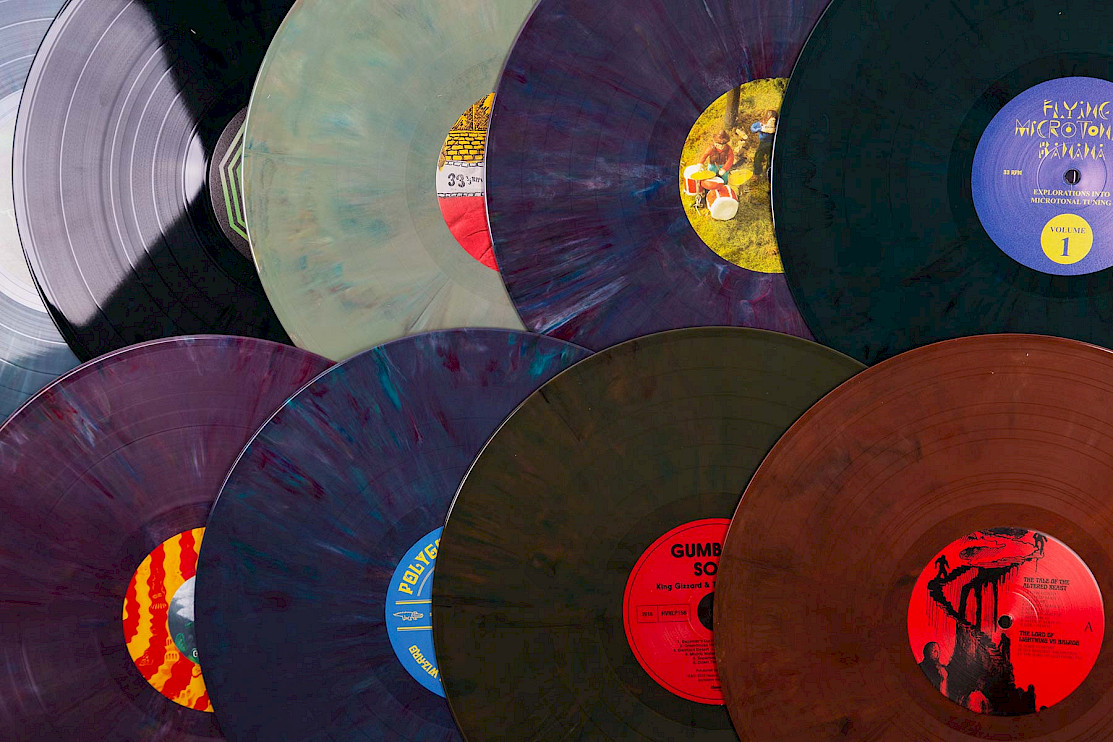
Initially this meant ending up with random "lucky dip" coloured vinyl, however a number of plants are taking this a step further by batching these offcuts into separate colours thereby enabling us to choose a specific colour range while still offering a unique product. This can be a great incentive for fans wishing to own something unique while at the same time helping reduce the product’s environmental impact. And it’s no more expensive than regular coloured vinyl!

Pressing plants can also offer the option to use reground black vinyl from the offcuts of black vinyl orders and then mixed with new “virgin” vinyl to reduce waste. Check out King Gizzard & The Lizard Wizard's ‘Love Record Stores’ special edition which used reground vinyl throughout.
Reduced Impact Vinyl
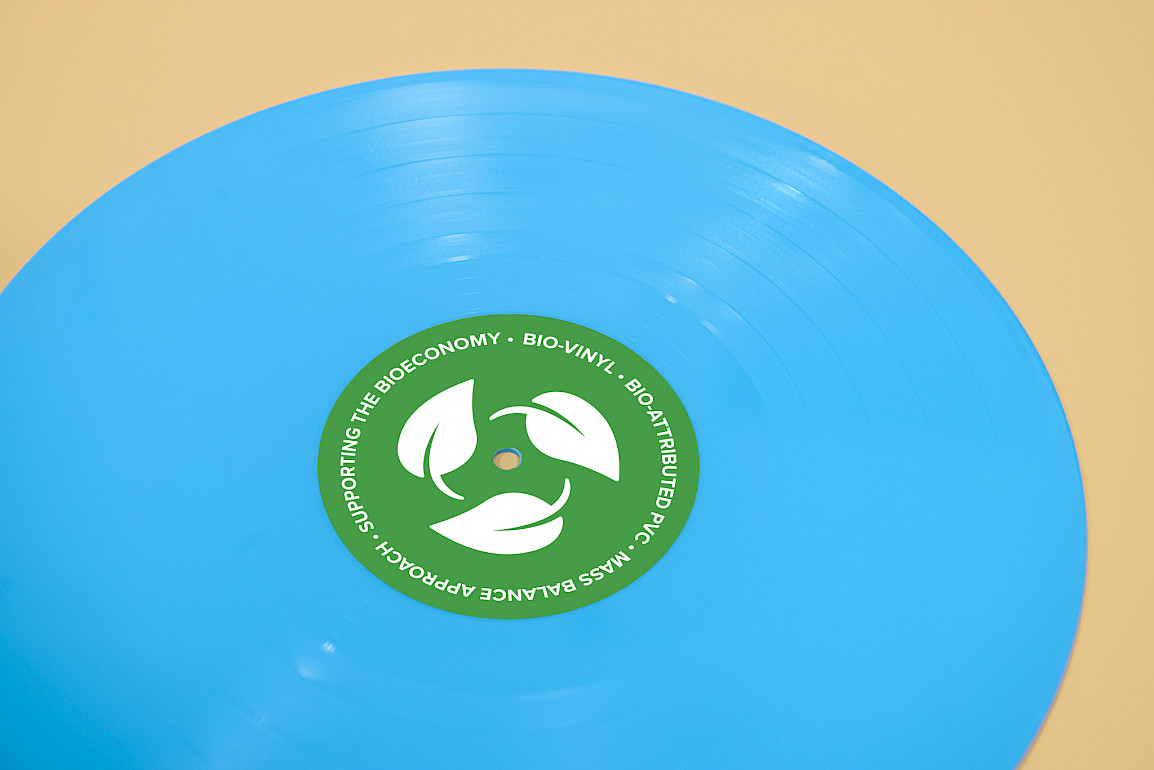
We're thrilled to introduce bio-attributed PVC records! These innovative records offer the same exceptional sound quality and vibrant colours we all love, but with a reduced environmental impact.
How it Works
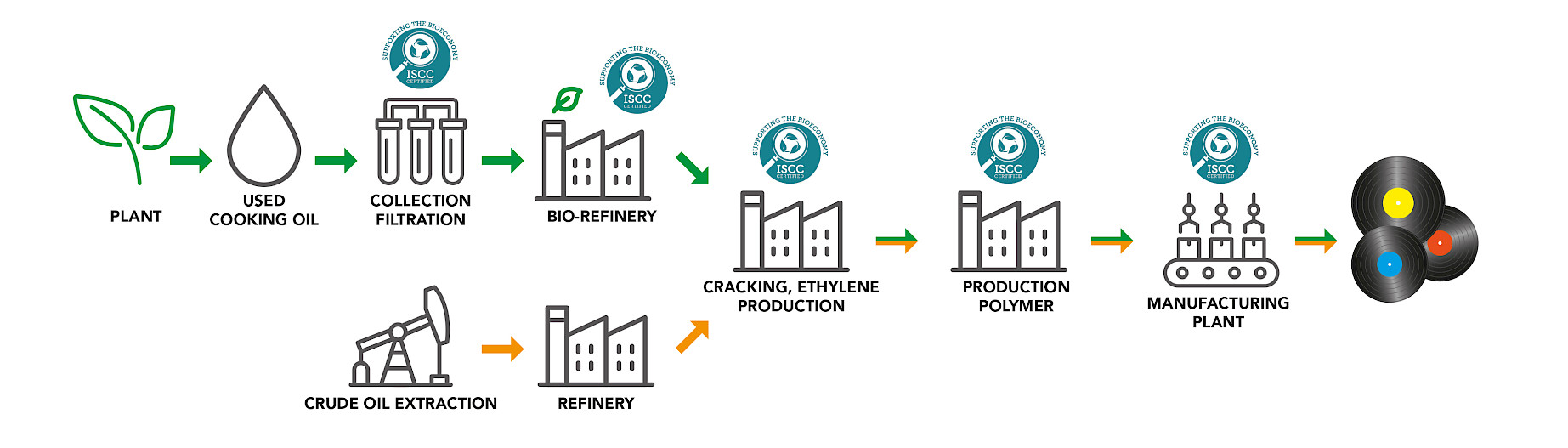
Imagine making plastic, but instead of using raw materials purely from fossil fuels, you add some bio-sources into the mix – like a recipe where some of the traditional ingredients are replaced with plant-based or recycled alternatives. These materials are used to replace fossil fuel inputs at the start of the manufacturing process and are then attributed to the final product, ensuring a clear link to the eco-friendly sources entering the supply chain.
Why Choose Reduced Impact Vinyl?
No Compromise on Quality: Enjoy the same pristine sound and vibrant colours you've come to expect from our records.
Reduced Reliance on Fossil Fuels: By incorporating renewable or recycled materials, we're decreasing our dependence on oil for PVC production.
Lower Environmental Impact: This helps reduce greenhouse gas emissions and minimise waste.
Injection Moulded Records
Injection‑moulded records represent a developing alternative to traditionally‑pressed PVC vinyl. Unlike traditional records, which are made by pressing a heated PVC puck between two metal stampers, these records are made by injecting molten PET plastic into a mould. This process is similar to that used to make CDs and DVDs, producing a disc that plays on any standard turntable.
Working with industry partners who specialise in this technology, we’re able to offer a PET‑based format that provides clear, stable playback characteristics while supporting measurable reductions in production‑stage energy use and CO₂‑equivalent emissions when compared with traditional PVC pressing.*
Why PET‑Based Injection‑Moulded Records?
Material Options
PET is a well‑established material used across many industries and is supported by existing recycling systems (where local facilities exist). Injection‑moulded records can also be maed from recycled PET (rPET) – so can incorporate for e.g. recycled plastic bottles.
Reduced Energy Use During Manufacture
Unlike traditional vinyl pressing, injection moulding does not use steam‑heated presses. This allows for notable reductions in electrical and thermal energy use during the record‑forming stage. In practice, this means that the production process can require significantly less energy per record than conventional PVC pressing.*
Measured CO₂e Differences
Carbon footprinting data for PET records is continuing to evolve, but early third‑party verified industry datasets indicate that PET records can lower CO₂e emissions compared with standard PVC pressings. Actual values depend on factors such as material source (e.g., virgin PET vs rPET), local energy mix, and packaging choices.*
*Emissions data based on independent third-party verified industry average carbon footprint data for a 140g 12” record (100% virgin PVC/PET) including paper inner sleeve, cardboard outer and shrinkwrap. Click for more
More Sustainable Options and Considerations for Print and Packaging
Paper and Card
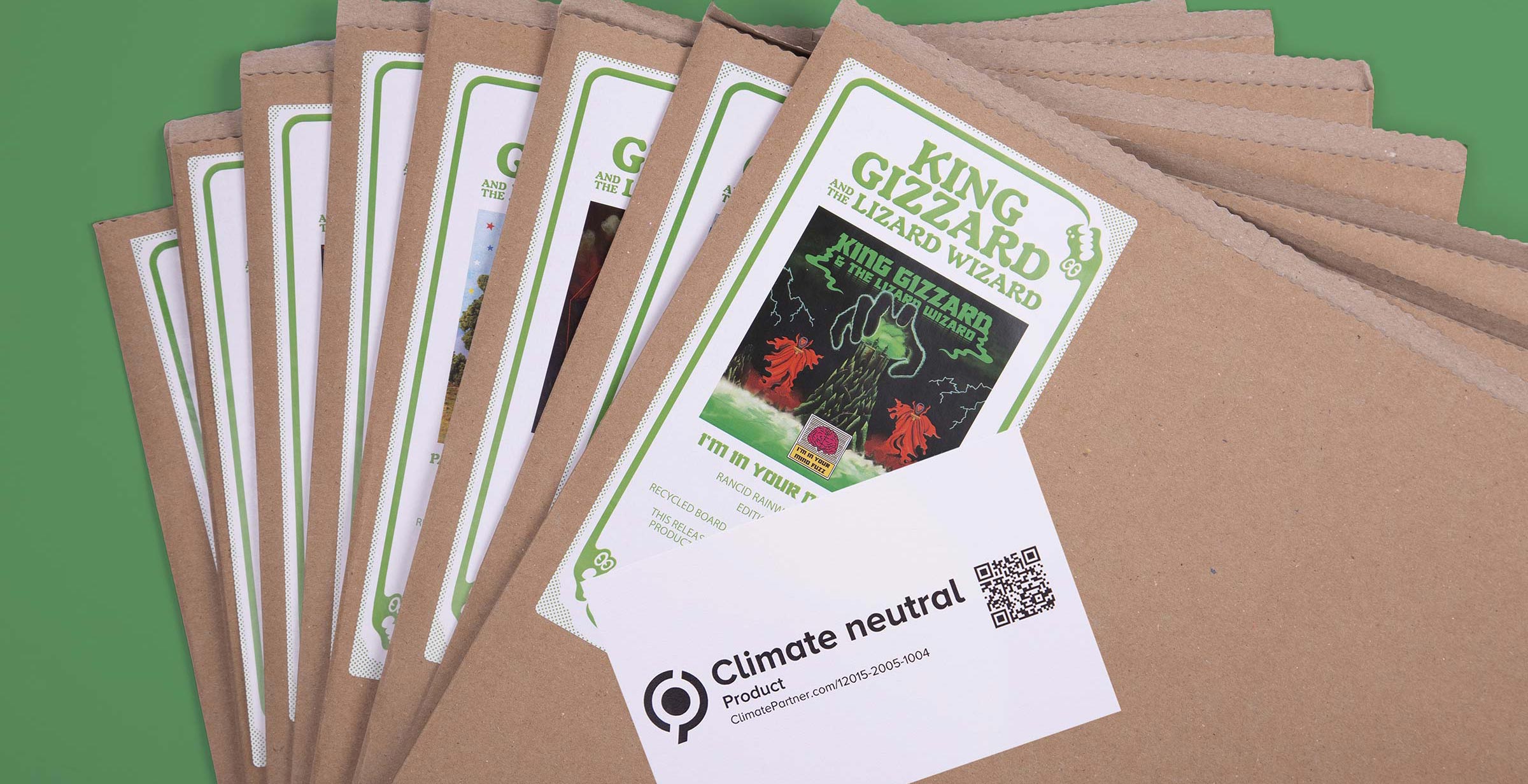
We would recommend using all card / paper-based packaging wherever possible. The use of vegetable-based ink and FSC certified paper reduce the environmental impact of the processes involved in vinyl sleeve and CD-pack printing.
Finish and Materials
There are many options you can choose to elevate a package while minimising any additional environmental impacts. Processes such as embossing, die-cutting and laser cutting can really elevate a package without adversely affecting a product’s footprint.
Consider avoiding certain special finishes on your card product. Extra processes such as traditional laminate finishes can make waste left over from manufacture difficult or impossible to recycle, as they turn a recyclable card into one with mixed materials – the enemy of all recycling plants.
For box sets consider a card fitment instead of foam. It’s recyclable and keeps all your items in place.
Considerations for More Sustainable CDs and Cassettes
CDs
CDs are made from optical grade polycarbonate. For CD manufacture, there is very little plastic waste from the production process itself due to the way the discs are made. Damaged or faulty product can be recycled but the polycarbonate cannot be reused in production so is recycled at specialist facilities.
For CD packaging, we strongly recommend continuing to avoid plastic jewel cases in favour of card alternatives. Well-designed card packaging can be visually striking and offers a significantly reduced footprint. We offer a range of resource-efficient and waste-reducing CD packaging options, all sourced from suppliers who can provide FSC-certified paper and board, guaranteeing materials come from responsibly managed forests.
We discourage the use of digipacks with plastic trays and encourage exploring alternative packaging solutions that minimise material usage, maximise recyclability, and reduce overall environmental impact. We collaborate closely with our clients to find the best packaging solutions that meet their specific needs while prioritising environmental considerations.
Cassettes
For cassettes we prioritise packaging solutions that minimise environmental impact. We encourage the use of recycled cassette shells where possible, alongside cardboard sleeves. Our goal is to offer cassettes and cassette packages that are both practical and as environmentally responsible as possible.
Shrinkwrap
Shrinkwrap protects stock during transit, minimising damage-related returns and waste. While standard shrinkwrap is both recyclable with flexible plastics, (for example with shopping bags in the UK) and accounts for only a tiny fraction of the carbon footprint of a physical music product, exploring alternatives is encouraged.
Options include obi strips, resealable bags, poly overbags (these can be supplied using 100% recycled content), and shrinkwrap with bio-attributed content (though these are still single-use plastics). Plastic outer sleeves can offer a comparable level of protection to shrinkwrap against dust and minor bumps while belly bands can provide product authentication but will not offer the same level of damage resistance.
We recommend consulting with your distributor or online retailer to find out their specific requirements and exploring alternatives like durable plastic dust covers or paper belly bands to minimise environmental impact.
Transport
Transport of your finished stock to its final destination is an important consideration. Intelligent forecasting and careful planning help Key minimise any unnecessary impact in the transport of goods by ensuring vehicles are carrying optimum capacity. For example, if you have European stock being made in Europe, we can arrange direct delivery within Europe for you. Please do ask us to advise you on how to better manage your deliveries. We are happy to help you to help the planet.
Air Freight
Probably the biggest potential single impact on emissions is air freight, which should be avoided wherever possible in favour of land / sea freight or by more local manufacturing where feasible.
Carbon Balancing
Key Production can offer (and manage for you) carbon balancing of your manufacturing run. We select our suppliers based not only on their ability to deliver the high quality we demand but also on their ability to demonstrate ecological sustainability in their business practices, ensuring their environmental impact is mitigated. We applied these same principles when selecting a partner for carbon balancing.
Our carbon balancing is managed through C-Level with the CommuniTree project, a highly respected reforestation project in Nicaragua. C Level Carbon Balanced projects are all verified under the global Plan Vivo Standard, the world's original community carbon standard.
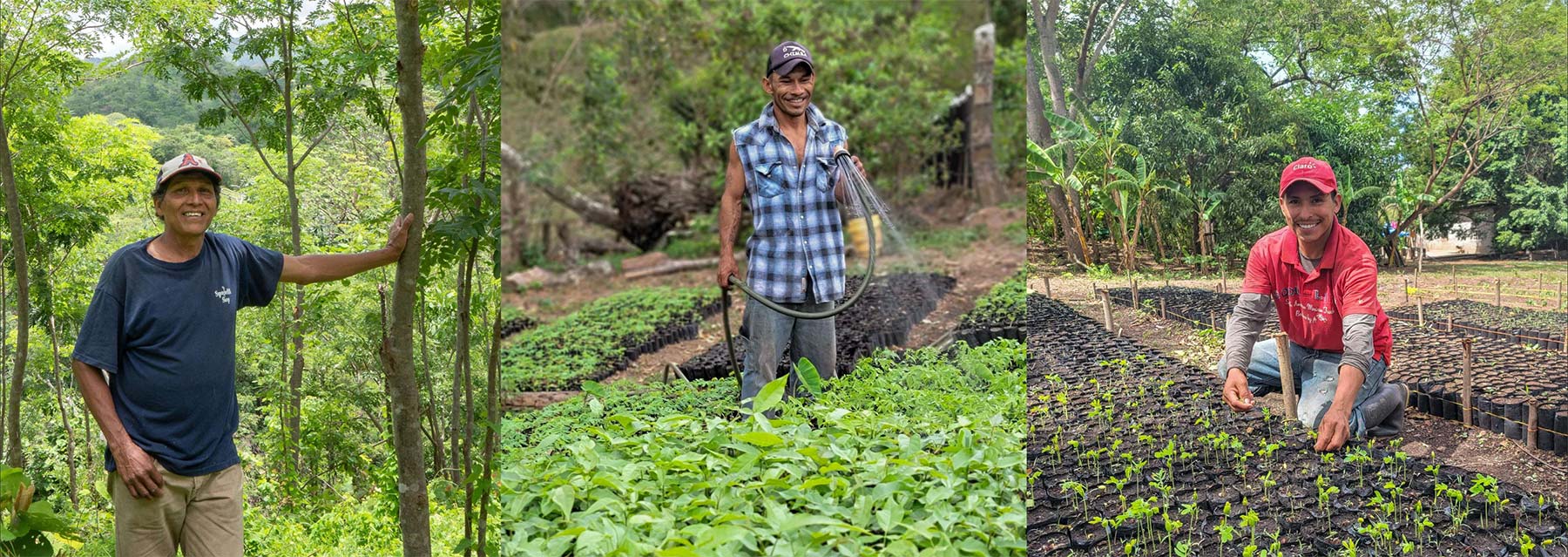
CommuniTree has continued to lead the way for smallholder reforestation becoming Plan Vivo's largest project, by generating over 1,000,000 carbon credits in 2022 (planting an estimated 6,311,480 trees on 4,739.28 hectares of land). Read the latest CommuniTree Annual Report to find out more about their latest achievements, hear from farmers and much more.
Recycling Vinyl and CDs
We believe vinyl and CDs should be cherished and with proper care, can last a lifetime. However, if you find yourself with damaged items that you need to recycle, options are available.
Distributors
Many distributors have their own responsible recycling schemes. If you work with a distributor, please check with them for their specific recycling procedures.
Key Production Recycling
Alternatively, we can accept your records and CDs for recycling. This is a free service simply requiring delivery of the units for recycling to the address below (open Mon-Fri 9am-5pm). We will then ensure that every part of the product is recycled responsibly.
If you would like to use this service, please send to: Key Production Recycling c/o MCM Fulfilment, Stadium Business Centre, Unit 27, North End Road, Wembley, Middx, HA9 0AT (Tel: 020 3188 1066).

Key Production's commitment and approach to Sustainability and Responsibility
Our commitment at Key Production goes beyond making beautiful products. We are continually looking for more sustainable practices in manufacture and to share our knowledge with others in the industry. Our purpose is to champion a more sustainable physical media and packaging industry, working collaboratively to raise standards of responsibility across the supply chain.
We pledge to:
- Maintain a sustainable business as part of a sustainable industry.
- Continually research and support more sustainable practices in manufacture.
- Share our knowledge with our clients, team and wider industry.
- Package responsibly through conscious decisions across all departments.
We are always striving to do the best we can for people and the planet both through our direct actions as well as pushing for change within our industry. We believe if we are really going to make a difference then the world needs all companies to do business better by positively impacting all stakeholders – workers, communities, customers, and our planet.
At Key Production we use our wide network across the supply chain, as well as the wider industry, to push for improvements in sustainability within manufacturing. From certifying as a B Corp to encouraging a forum for suppliers to share best practices to advocating for the uptake of reduced impact vinyl variants for its clients, Key are at the forefront of driving change in the industry.
Emissions
When talking about emissions it’s important to understand (and report) on Scope 1, 2, and 3 emissions for several reasons.
- Comprehensive Footprint:
It provides a complete picture of a company's environmental impact. - Find Reduction Opportunities:
It helps pinpoint the most significant sources of emissions, allowing for targeted reduction strategies. - Transparency and Accountability:
It allows tracking of progress.
What are the 3 Scopes?
Scope 1 Emissions: Direct Emissions
These are greenhouse gas (GHG) emissions that occur from sources that we own or control. E.g. Emissions from company vehicles or on-site industrial processes.
Scope 2 Emissions: Indirect Emissions from Purchased Energy
These are GHG emissions associated with the generation of purchased electricity, steam, heat, and cooling consumed by your company. E.g. Emissions from the power plants that generate the electricity used in our offices.
Scope 3 Emissions: Other Indirect Emissions
These include all other indirect GHG emissions that occur in our company's value chain, both upstream and downstream. Scope 3 emissions are often the largest source of a company's carbon footprint and can be the most challenging to measure and manage. E.g. Emissions from the production of purchased goods and services, transportation of goods, business travel, employee commuting, waste disposal.
As an organisation with primarily office-based operations, we recognise that our direct environmental footprint is relatively small. However, we believe that every action counts, and we are committed to embedding sustainability into all aspects of our business. We’ve been tracking our emissions for several years, setting targets to minimise our impact, from office supplies and web hosting to everything in between. We then carbon balance these emissions, achieving carbon neutrality/positivity. We prioritise renewable energy in our owned premises and are actively working to influence the adoption of renewable energy within our rented spaces.
We understand that the most significant impact related to our activities comes from our supply chain. Therefore, a large part of our focus is on influencing the industry and encouraging sustainable choices. We proactively educate our customers on sustainability, for example, by including helpful tips with every quote we send. We also have comprehensive eco-policies in place covering areas such as office operations, staff travel, and home working, ensuring sustainable practices are integrated into every level of our organisation.
Impact Report
We believe in operating with transparency and accountability. Our Impact Report offers a comprehensive look at our environmental performance, showing our commitment to measuring and reporting on our progress towards a more sustainable future.
Climate Action Plan
We are committed to playing our part in tackling climate change in a way that is practical, transparent, and aligned with how our business operates.
As a business working in the physical media and packaging industry, our focus is on managing our own operational impacts while using our influence to support more sustainable decisions across the supply chain.
Our Climate Action Plan sets out the actions we are taking to support the global ambition to limit warming to 1.5°C.
B Corp Certification
We're incredibly proud to be a Certified B Corporation, the first and currently only company in our sector within the music industry to achieve this. B Corps are businesses that meet the highest standards of verified social and environmental performance, public transparency, and legal accountability. It's more than just a certification; it's a movement of companies using business as a force for good. We believe in the triple bottom line—People, Planet, and Profit—and are committed to creating a more inclusive, equitable, and regenerative economy. The rigorous B Impact Assessment evaluates our impact on our workers, customers, community, and environment, ensuring we're constantly striving to do better for people and the planet. Find out more about B-Corp.
Employee Ownership

In 2024, we took a significant step in our commitment to our employees by transitioning to an Employee Ownership Trust (EOT). This means that our company is now owned by its employees, who collectively benefit from our success. The EOT is managed by trustees who act in the best interests of our employees, ensuring their voices are heard and their contributions are valued. This transition reflects our belief in the power of shared ownership and our commitment to creating a more equitable and sustainable future for our company and our employees. We were helped and guided in this process by the EOA.
Good Business Charter Accreditation

The Good Business Charter is an accreditation that recognises organisations committed to responsible business practices. It measures various aspects of a business against a set of 10 components, encompassing fair treatment of employees, customers, suppliers, and the environment, as well as ethical financial conduct.
Living Wage Employer

As a Living Wage Employer, we are committed to ensuring that all our employees, including contracted staff, earn a real Living Wage. This rate is independently calculated each year based on the actual cost of living, providing a fair and dignified standard of living. Our Living Wage accreditation reflects our belief in valuing our workforce and ensuring they receive a wage that meets their everyday needs. You can find out more at the Living Wage Foundation.
Better Business Act

At Key Production, we believe that creating a truly sustainable future requires both individual action and systemic change. We're committed to doing our part for people and planet, and we also believe in the power of collective action to transform the business landscape. That's why we're proud supporters of the Better Business Act. This campaign calls for an amendment to Section 172 of the Companies Act, requiring directors to manage their businesses in a way that benefits all stakeholders—including workers, customers, communities, and the environment — alongside shareholders. We believe that by making this legal change, we can create a business environment where every company is incentivised to contribute to a better world.
Human Rights
We work with people all over the world - from pressing plants and print suppliers to logistics partners and creative teams. Respecting the rights and wellbeing of those people is fundamental to how we operate.
We are committed to respecting human rights across our business and supply chain. Our approach is guided by internationally recognised standards, including:
- The UN Guiding Principles on Business and Human Rights
- The Universal Declaration of Human Rights and International Bill of Human Rights
- The International Labour Organization (ILO) Declaration on Fundamental Principles and Rights at Work
In practice, this means we support:
- Safe and fair working conditions in manufacturing and production environments
- The elimination of forced labour and modern slavery
- The abolition of child labour
- The treatment and equal opportunity at work
- The right for workers to be heard and represented
We recognise that making physical products often involves complex global supply chains. We aim to work with partners who share these values, and we take steps to avoid causing or contributing to negative impacts through our own activities. Where issues arise, we are committed to addressing them responsibly.
This commitment applies across our business and informs how we choose partners, manage projects, and build long-term relationships.
Carbon Training
We believe that education is key to tackling the climate crisis. That's why we provide carbon training to all our staff. This training empowers our employees to understand the climate emergency, measure their carbon footprint, and take effective action to reduce emissions. By fostering a culture of sustainability, we are driving collective action towards a more sustainable future.
Sustainability Surveys

In 2023, we conducted a materiality assessment to identify the environmental, social, and governance (ESG) issues most relevant to our business and stakeholders. This process helped us prioritise the areas where we could have the greatest positive impact. Building on the insights gained from this assessment, we launched a comprehensive sustainability survey in 2024 to gather broader stakeholder perspectives on these key issues. This survey allowed us to delve deeper into the topics identified as material and gain a more nuanced understanding of stakeholder expectations. The findings of this survey have been compiled into a short report.
Read the Sound and Sustainability Report 2024
Working in Partnership
At Key Production we are constantly reviewing our practices to reduce our impact on the environment and support organisations who share that aim. Our network of partners enables us to provide knowledge, guidance and balance for all our customers from unsigned artists to major record labels alike. For over 30 years we have partnered with some of the most important bodies that represent, influence, educate and inform the music and media industries as well as supporting and donating to a number of charities.
Music Climate Pact
Key Production Group is an official Supporter of the Music Climate Pact. This pact uses the strength of the music industry to work together and really make a change towards a more sustainable industry. We are honoured to co-chair the Vinyl Working Group within the Music Climate Pact.
Music Declares Emergency
Music Declares Emergency is a group of artists, music industry professionals and organisations that stand together to declare a climate and ecological emergency and call for an immediate governmental response to protect all life on Earth. We believe in the power of music to promote the cultural change needed to create a better future. Find out more about Music Declares Emergency.
Evolution Music
Evolution Music is a collective of music industry and sustainability experts who want to see the music industry evolve to become sustainable, environmentally and socially responsible. They are introducing bioplastics and circular economy principles that will accelerate the evolution of the industry to become earth friendly and socially responsible. Find out more about Evolution Music